Athletic scholarship in the United States: process, requirements and real steps
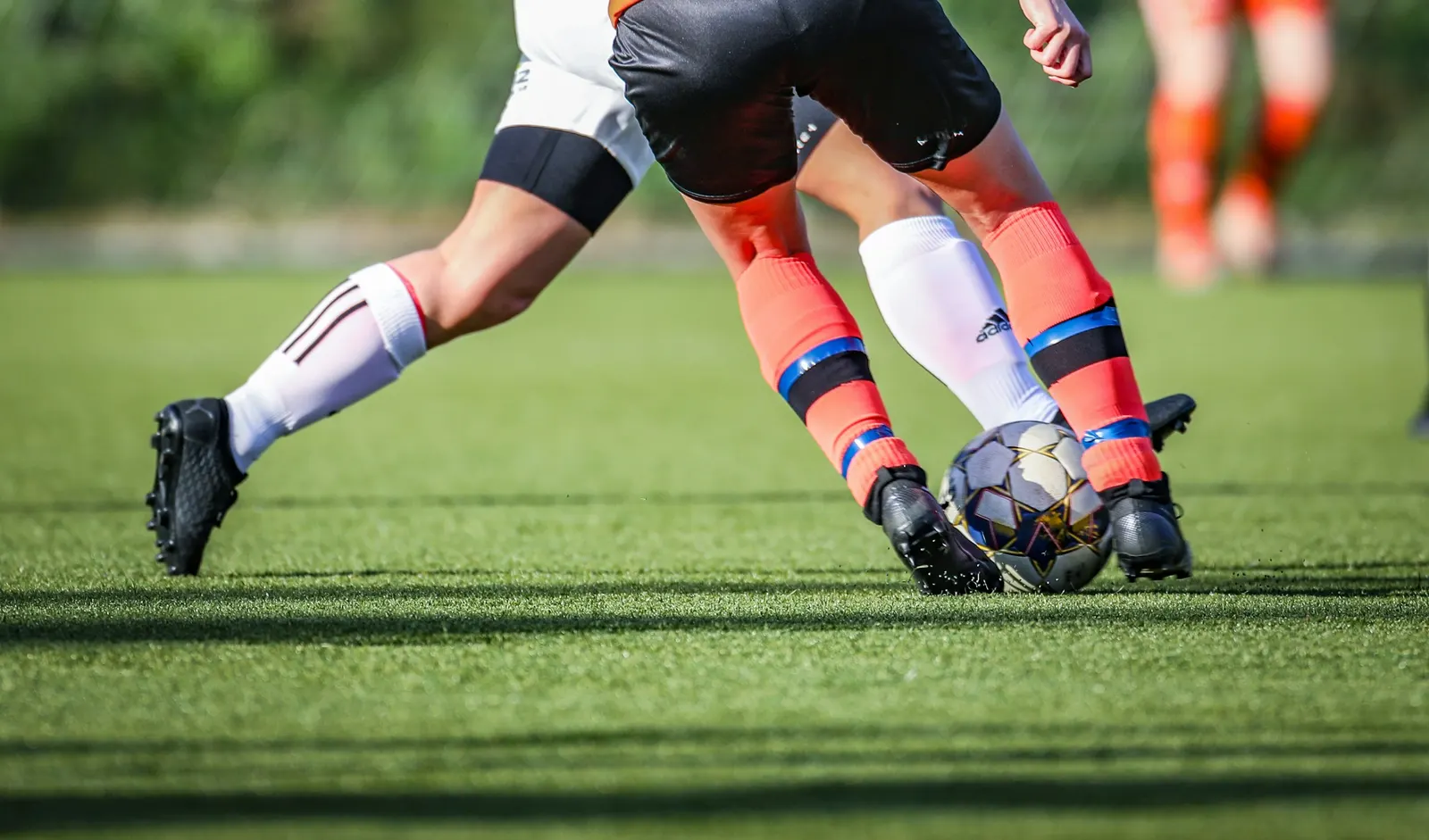
An athletic scholarship in the United States is not just financing: it is access to an elite training program, accredited university education and a platform to compete at an international level. But the process does not start with an email to a coach nor end with a verbal offer.
The realistic timeline: when to start looking
Most Latin American athletes lose opportunities by not understanding the timeline of the American system. Recruiters from Division I and II universities begin tracking athletes between ages 14 and 15, but intensive recruitment occurs during the second and third year of high school. This does not mean you need to be signed at that age; it means that coaches are already watching videos, championship records and performance trends.
If you are 16 or 17 years old and have not yet started the formal process, it is not too late, but time is compressed. To apply to a university with fall entry the following year, the recruitment cycle is already underway. If you are under 15, establish a two-year plan to build a competitive profile.
Your graduation year is critical: between January and May, coaches finalize their recruitment lists. Any communication after June is less effective.
Academic requirements: the first filter
This is where many solid athletic candidates get eliminated. American universities with serious sports programs have academic standards they do not negotiate, even if you are a promising athlete.
In competitive divisions (D1, D2), you need a minimum average of 2.3 to 3.0 on your local scale, depending on the university. But absolute numbers vary: what matters is that you understand your GPA is converted using international equivalencies, and some Latin American educational systems grade differently than the American system. A grade of 8.5 in some countries is not the same as an 8.5 in another.
There is also the SAT or ACT, American standardized tests that almost all universities accept. Here there are fixed numbers: a SAT of 1000+ (out of 1600) is competitive for D2, D3 and lower divisions; 1150+ significantly improves your options in D1. These tests are administered at exam centers distributed throughout Latin America, with costs between USD 100 and 200, and require serious preparation. A month or two is not enough; most athletes invest 3 to 4 months if they come from an educational system different from the American one.
The academic aspect should never be your excuse for not contacting universities. Communicate your current profile early: if your GPA is not ideal but is improving, an interested coach can wait for your next report. What is not forgiven is the surprise at the last minute.
Building your athletic profile: what recruiters see
A YouTube video of a game is not your athletic profile. College coaches look for consistency, context and specific data about your performance.
First: at what level do you currently compete? If you only play in your local league, your profile has a low floor. Recruiters value participation in national championships, recognized regional or international tournaments, and—depending on the sport—national selections or elite teams. In Latin America, standing out in a regional championship or at South American Games is different from being a regular at your local club. Your trajectory must show progression: better performance, higher-level competitions, more consistency.
Second: statistics and metrics. In sports with clear numbers (goals, assists, points, race times), document your performance. In more subjective sports, game videos and technical evaluations are your evidence.
Third: the presentation video. It is not a 3-minute highlight reel with dramatic music. It is 2 to 3 minutes of material showing your game in match context, your technical abilities and your position. Some sports have specific formats: in soccer, coaches want to see ball touch, decision-making and defense. In track and field, a video of a complete race is more valuable than short clips.
Platforms like Smidrat allow athletes to build an athletic profile visible to recruiters, centralizing video, statistics and trajectory in one place that coaches can consult. It is a tool to organize what you already have and make it accessible without depending on emails or direct contacts.
Direct contact: how to approach universities
Waiting for a recruiter to find you while you play in your league is waiting for a miracle. The recruiter does not travel to your city without prior reason. You are the one who must make yourself visible.
Identify 15 to 20 universities that align with your athletic and academic profile. Not just big names: include D3, non-NCAA universities, and lower division programs where your performance can be significant. Search for programs in your position, leagues where you have interest and locations that appeal to you. An indiscriminate search for 'universities with scholarships' is not a strategy.
Contact the assistant coach or head coach directly. Their email is on the university website. Your message should be brief: introduction in 2 lines, link to your profile (video or platform like Smidrat), GPA and SAT/ACT, and specific questions about the program. Avoid: 'I am an exceptional player', 'Would you give me a scholarship?', or copy-and-paste messages. Coaches recognize them instantly.
Direct example: 'I am [name], center back from [club/country], with a GPA of [GPA] and SAT [score]. I participated in [major championship] where [relevant fact]. My video is at [link]. What is the recruitment process for the next cycle in your program?'
Expect a response between 1 and 3 weeks. If there is no response after two attempts, move on. It is not rejection; it is that the coach does not have availability or your profile does not fit their current needs.
Multi-sport: strategic position or delusion
Some athletes think that playing two sports increases their scholarship options. In reality, the opposite happens. Universities invest scholarships in specialists who can dedicate quality time to specific training. An athlete who plays soccer in the fall and track and field in the spring has less availability for preseason training, conditioning and video preparation.
Genuine exceptions exist: jumping athletes in track and field who also play volleyball, or distance runners who compete in cross country and track, sports with complementary schedules. But in general, expect a college coach to ask you to choose one discipline if you want to be competitive for a scholarship.
If you currently compete in two sports, focus your recruitment on one. The sport where you have the best relative performance is your best path.
Scholarships: what to really expect
Not all athletic scholarships cover 100% of costs. In Division I, some popular programs offer full-ride scholarships (tuition, housing, meals, books); others offer partial scholarships or tuition coverage only. In Division II and III, scholarships are generally smaller. The scholarship is not cash: it is an education benefit, and its value depends on the university (some cost USD 70,000+ per year; others, USD 20,000).
It is also important that you know a scholarship can be reduced or not renewed if your athletic performance decreases, if you get injured, or if the coach changes. While rare, it happens. Education is your personal investment; the scholarship is support while you perform at the expected level.
For Latin American athletes, there are additional considerations: student visa (the coach usually helps with the process, but you finance it), cultural adaptation, and travel costs. A scholarship that covers only tuition can still be expensive if you must add off-campus housing.
Final preparation: the interview and campus visit
If a coach shows formal interest, they may invite you for a campus visit (official or unofficial). Here the real evaluation happens: between you and the program, you will decide if it is a mutual fit.
Prepare as if it were a job interview: research the program, review the academic profile of current athletes, understand the coaching philosophy and team expectations. Bring prepared questions about training volume, academic support for athletes, playing time opportunities, and recent trajectory of the program.
Your performance in a physical test (if there is one) and your interaction with current team athletes will be decisive. Coaches do not just look at athletics: they observe maturity, learning ability and compatibility with team culture.
Frequently asked questions
Frequently Asked Questions
At what age is it too late to seek an athletic scholarship?
If you are 17 years old or younger, there is still time, but the process accelerates. Coaches close their lists between January and May of your graduation year. At 18 years old or in your final year of high school, options are significantly reduced. It is not impossible if your profile is exceptional, but the competitive advantage belongs to those who start the process from age 15 or 16.
Do I need an agency or representative to get a scholarship?
It is not mandatory. Many athletes contact universities directly with success. Agencies can speed up the process and open doors at high-profile universities, but they charge commissions (often 10-20% of the scholarship value). If your profile is academically solid and you have good videos, you can make direct contact without intermediaries. Agencies have value if you compete in a saturated sport or are seeking highly competitive Division I universities.
What if I don't get a full athletic scholarship?
Many athletes combine partial athletic scholarships with academic financial aid (academic scholarships, grants, loans). The athletic scholarship can cover tuition and you access additional academic financing. There are also non-NCAA programs and smaller universities with lower costs where a partial scholarship is more significant. The best strategy is to diversify your applications among universities with different base costs.
Founder of Smidrat. A lifelong amateur footballer who works in technology: started out developing in Java, moved on to Apex on Salesforce and now works in cloud infrastructure. Created Smidrat so young Latin American athletes get more chances to be seen.
Share